Tin ngành
Hệ sinh thái lượng tử Việt Nam: Khát vọng làm chủ công nghệ và vươn tầm quốc tế
(giờ Việt Nam)
Tóm tắt AI
Việt Nam đang đẩy mạnh hợp tác giữa Nhà nước, doanh nghiệp và giới học thuật để xây dựng hệ sinh thái lượng tử, hướng tới mục tiêu làm chủ công nghệ lõi và hội nhập sâu rộng vào thị trường toàn cầu.
Bản dịch AI
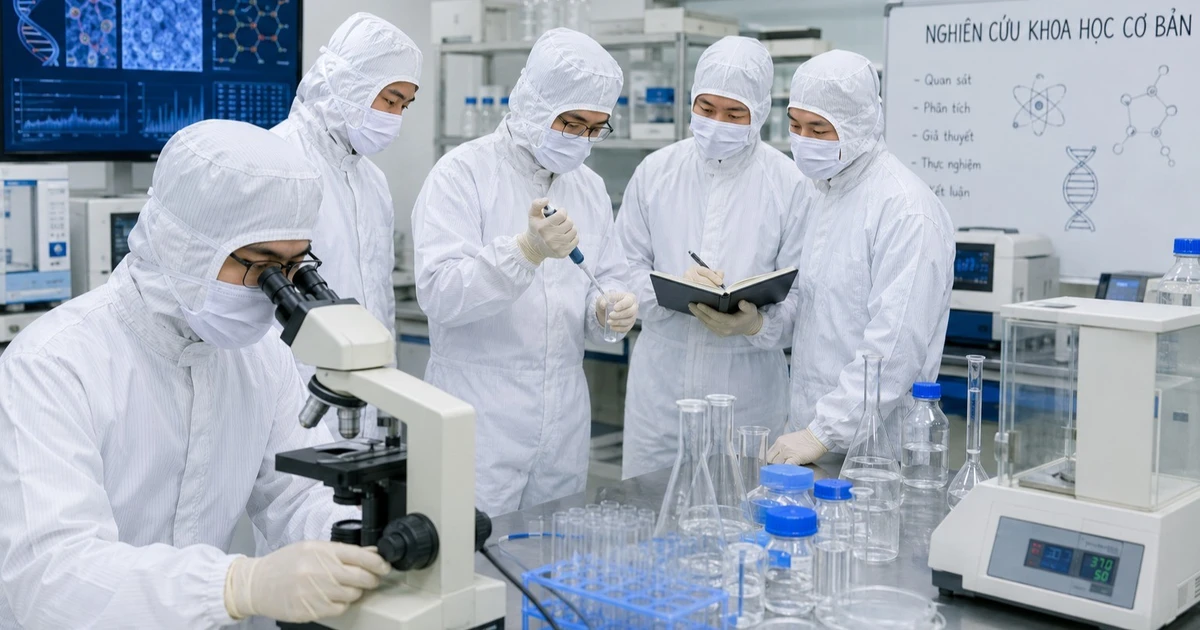
In the context of the global technology race shifting toward new frontiers, quantum technology is no longer just a narrative confined to theoretical physics laboratories.
In Vietnam, a strategic roadmap is gradually taking shape, marking a transition from basic research to practical application with the participation of core "nuclei" from the National Innovation Center (NIC), major technology corporations, and specialized research institutes.
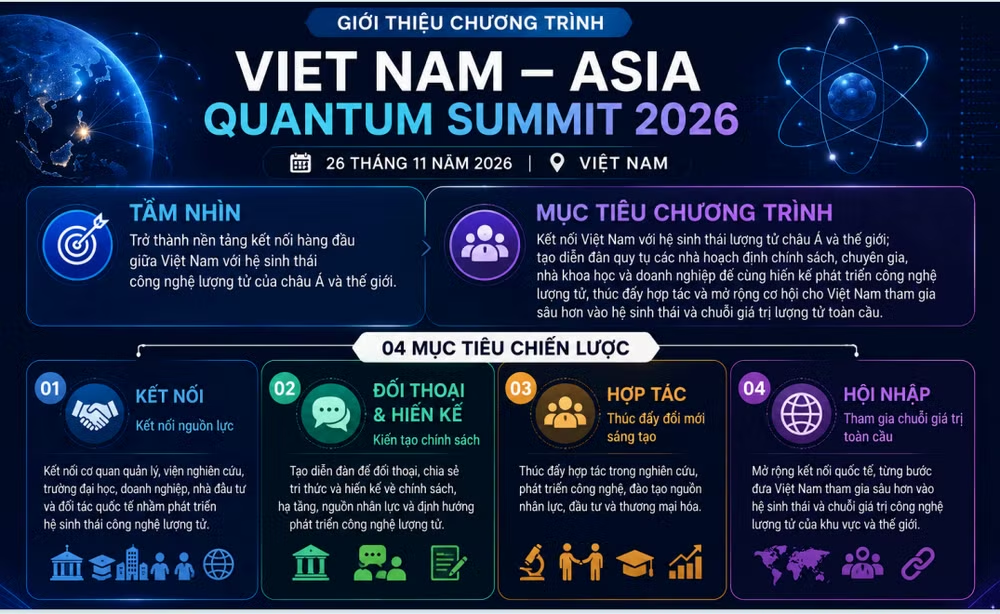
The launch of the Vietnam-Asia Quantum Summit 2026 is not only a milestone commemorating the one-year anniversary of the Quantum Technology Expert Network (VN Quantum), but also an affirmation of the aspiration to make Vietnam an important link in the regional and global quantum value chain.
The "bottleneck" of human resources and the core technology gap
Although considered a field with the potential to completely transform the socio-economic landscape, quantum technology in Vietnam still faces significant challenges, particularly in training and mastering core technologies.
Dr. Nguyen Van Duy, Head of the Quantum AI Lab at Phenikaa University, stated that the country currently lacks specialized undergraduate training programs in quantum technology. According to him, existing training programs only reach a level of proximity such as Physics, and the field of applied quantum remains a significant void.
To address this, the research team at Phenikaa has proactively developed specialized course modules, training students directly in the laboratory according to international curriculum standards. Mr. Duy shared that they are focusing on three key directions: hardware research based on superconducting circuits, the development of quantum logic gates, and, notably, the problem of quantum error correction—which is considered the biggest "bottleneck" preventing quantum computers from solving large-scale practical problems.
"For computers to execute algorithms as theorized, they must be able to correct errors, and this is exactly what the world is particularly focused on," Mr. Duy emphasized.
Sharing the same view on the urgency of building a foundation, Professor Lai Ngoc Diep from Paris-Saclay University (France) pointed out a thought-provoking reality regarding the structure of the quantum industry in Vietnam. Through the observations of a scientist with many years of international experience, Professor Diep believes that Vietnam has strengths in "logistics" areas such as mathematics and data processing informatics, but suffers from a severe shortage in the "core" of experimental quantum physics. According to him, quantum technology cannot be developed in a "quick-fix" manner but requires a methodical, persistent training roadmap to "bear fruit."
Professor Diep also suggested a flexible postgraduate training model, where universities in Hanoi or Ho Chi Minh City could collaborate to build joint programs to maximize the use of limited expert resources and infrastructure. Connecting with the Vietnamese diaspora is also considered a strategic resource by him. The professor cited the success of Vietnamese individuals, such as Dr. Au Thi Huong - Head of Quantum Semiconductor Source Production at the quantum technology company Quandela (France), as evidence that Vietnamese talent is fully capable of reaching the pinnacle of this technology if placed in the right environment.
The synergy of enterprises
If the academic community is deeply concerned with theoretical foundations, the business sector in Vietnam has begun taking bold steps to commercialize and apply quantum technology to strategic problems.
Mr. Le Anh Ngoc, Deputy Director of the Quantum AI & Cyber Security (QACR) Institute at FPT Corporation, stated that the company established a specialized research institute last December with a commitment to invest up to 100 million USD. This demonstrates the private sector's determination to develop talent and deep-tech quantum capabilities.
According to Mr. Ngoc's analysis, the world is witnessing a strong shift from basic research to application. In this, "post-quantum cryptography" is the area with the most visible impact as it directly threatens current security systems. Countries (such as the US and Australia) have early on issued standards and mandatory transition roadmaps to post-quantum cryptography with a 2030 deadline. In Vietnam, entities (such as FPT, Viettel, or Phenikaa) have begun to proactively engage so as not to be left behind in the race for security and high-performance computing.
Mr. Ngoc predicts that in the near future, quantum computing will not be separate but will accompany traditional computing systems through a "Hybrid Cloud" model. In this setup, Quantum Processing Units (QPUs) will serve to reinforce the capabilities of existing Central Processing Units (CPUs) and Graphics Processing Units (GPUs). In particular, the combination of quantum and AI is expected to create breakthroughs in computing speed that traditional computers cannot reach. However, he also noted a major challenge: how to attract young people to pursue this field when parents always ask where they will work after graduation. The answer lies in specific policies, in-depth doctoral training roadmaps, and recruitment commitments from major corporations so that talent has a "stage to perform" right at home.
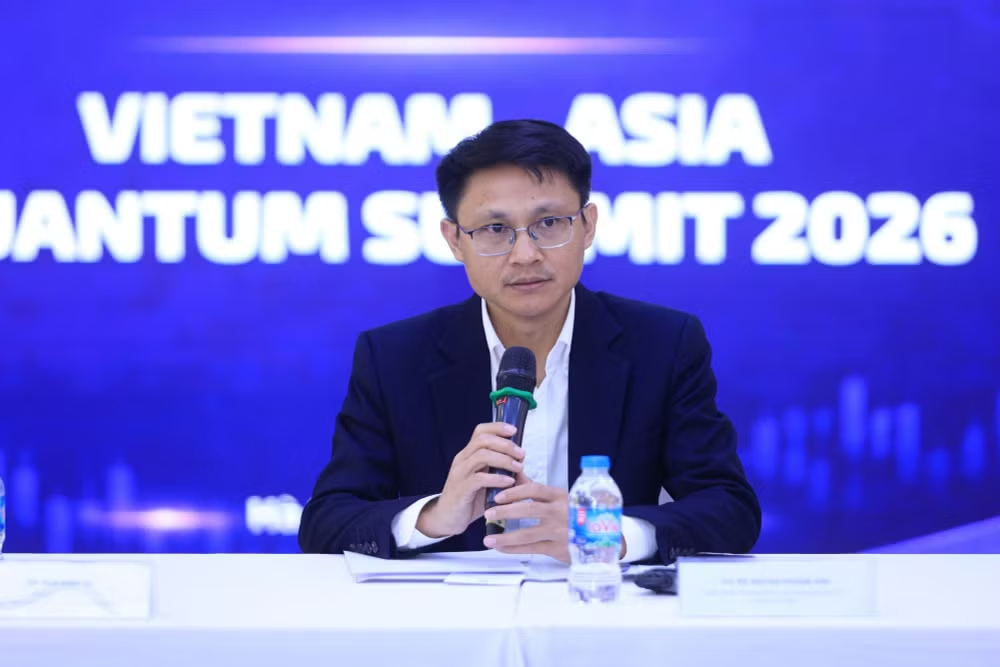
Regarding these matters, Mr. Vo Xuan Hoai, Deputy Director of the National Innovation Center (NIC), said that quantum technology has been included by the Government in the list of strategic technologies under Resolution 57-NQ/TW (on breakthroughs in national science, technology, innovation, and digital transformation). At the same time, he affirmed that the NIC is committed to being a creative nucleus, promoting linkages between research, human resources, and the investment market. Mr. Hoai expects the Vietnam-Asia Quantum Summit 2026 to be a gathering place for over 1,000 delegates from 25 countries, creating a multi-dimensional connected ecosystem. Beyond being a place for knowledge exchange, the summit aims to turn investment partnerships into concrete capabilities, putting quantum technology to work for socio-economic development and national security.
The development of the quantum industry in Vietnam is facing new opportunities with the accompaniment of major partners (from France, the US, Germany) to countries in the ASEAN region. On that basis, Dr. Nguyen Van Duy shared that fostering ties between ASEAN nations is an important factor in organizing robust scientific activities, as the quantum human resource in the region is currently very thin. Building a value chain together will help Vietnam and neighboring countries achieve a higher position on the global technology map.

Vietnam creates a bridge between Asia and the world in the quantum era
Gradually affirming its role as a bridge between Asia and the world in the quantum field, Vietnam is proactively participating in the global value chain and innovation network.
(Vietnam+)
Bài viết được AI dịch và tổng hợp tự động từ VietnamPlus Công nghệ. Liên kết bài gốc ở phía trên. AIHOT.vn luôn dẫn nguồn đầy đủ — nếu bạn thấy điểm cần chỉnh sửa, hãy gửi ý kiến tại trang phản hồi.