Tin ngành
Ngành ngân hàng Việt Nam: Chuyển dịch từ số hóa sang kỷ nguyên AI và dữ liệu thông minh
(giờ Việt Nam)
Tóm tắt AI
Ngành ngân hàng đang bước vào giai đoạn mới, tập trung khai thác sâu dữ liệu và AI để tối ưu hóa giá trị thực, tăng cường bảo mật và nâng cao trải nghiệm khách hàng thay vì chỉ mở rộng dịch vụ trực tuyến đơn thuần.
Bản dịch AI

Digital transformation in the banking sector is shifting from expanding online services to deep data mining and AI, with a focus on creating substantive value, enhancing security, and providing excellent customer service.
Digital transformation in the banking sector over the past five years has achieved many positive results. By the end of 2025, nearly 89% of Vietnamese citizens aged 15 and older had payment accounts, while the value of non-cash payments was more than 28 times the GDP. In the first 6 months of 2026 alone, the number of non-cash payment transactions increased by 34.28%, and the value rose by 12.24% compared to the same period last year.
Building on this foundation, digital transformation in the banking sector is entering a new phase, where data and AI not only support operations but increasingly become tools for risk management, fraud prevention, and the development of new service models.
This information was shared by Governor of the State Bank of Vietnam Pham Duc An at the 2026 Banking Digital Transformation event themed “Smart Banking in the Era of Data and AI,” organized by the State Bank of Vietnam on the morning of August 18 in Hanoi.
Digital infrastructure is increasingly being perfected.
At the event, Deputy Governor of the State Bank Pham Tien Dung stated that Resolution No. 57-NQ/TW of the Politburo identifies science, technology, innovation, and digital transformation as key drivers for national development. At the first 2026 meeting of the Government Steering Committee on the development of science, technology, innovation, digital transformation, and Project 06, the Prime Minister emphasized the requirement to develop digital infrastructure synchronously, ensure seamless data connectivity and sharing, and develop the data economy and AI; while simultaneously radically innovating mindset, taking substantive efficiency and the benefits of citizens and businesses as the yardstick.
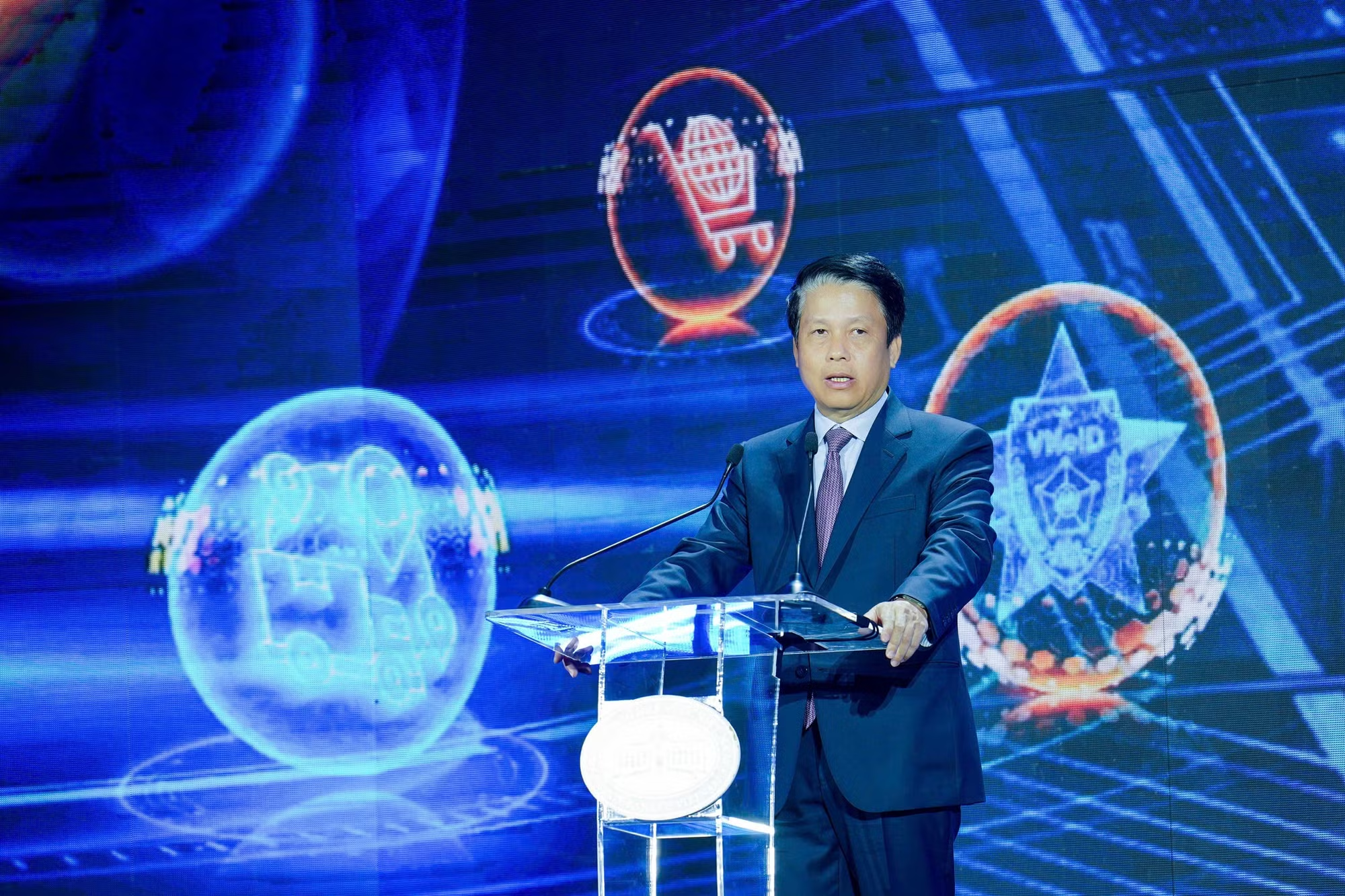
According to Mr. Pham Tien Dung, over the past five years, the banking sector has created a strong transformation from awareness to action, with an approach that centers on citizens and businesses, using the convenience and experience of service users as the measure of success.
The State Bank has completed many regulations to promote the application of science, technology, digital transformation, and non-cash payments, while removing legal bottlenecks and creating conditions for the application of new technologies such as authentication via VNeID.
Payment infrastructure continues to be invested in, upgraded, and expanded in connectivity. The interbank electronic payment system operates smoothly, safely, and effectively; the network of ATMs, POS, and QR payment acceptance is widespread nationwide. The State Bank has also implemented bilateral retail payment cooperation via QR codes between Vietnam and many countries such as Thailand, Laos, Cambodia, China, South Korea, and Singapore.
The ecosystem of digital products and services in the banking sector is increasingly connected and integrated with many other industries and fields. Many credit institutions report that the proportion of transactions via digital channels exceeds 95%.
In the 2021-2025 period, the number and value of non-cash payment transactions increased by an average of 58.86% and 24.36% per year, respectively. Financial transactions via QR codes alone have increased by an average of more than 100% per year over the past five years.
Data becomes a new layer of defense.
Along with expanding digital services, the banking sector pays special attention to connecting, cleaning data, and ensuring security and safety. As of July 31, 2026, the entire sector had successfully cross-checked biometrics for more than 167.8 million individual customer profiles and over 2.78 million institutional customer profiles through chip-based citizen identification cards or the VNeID application.
Major General Vu Van Tan, Director of the Police Department for Administrative Management of Social Order (C06), Ministry of Public Security, assessed that the application of technology, especially the exploitation of the National Population Database for customer identity authentication, is one of the important breakthroughs of the banking sector in digital transformation.
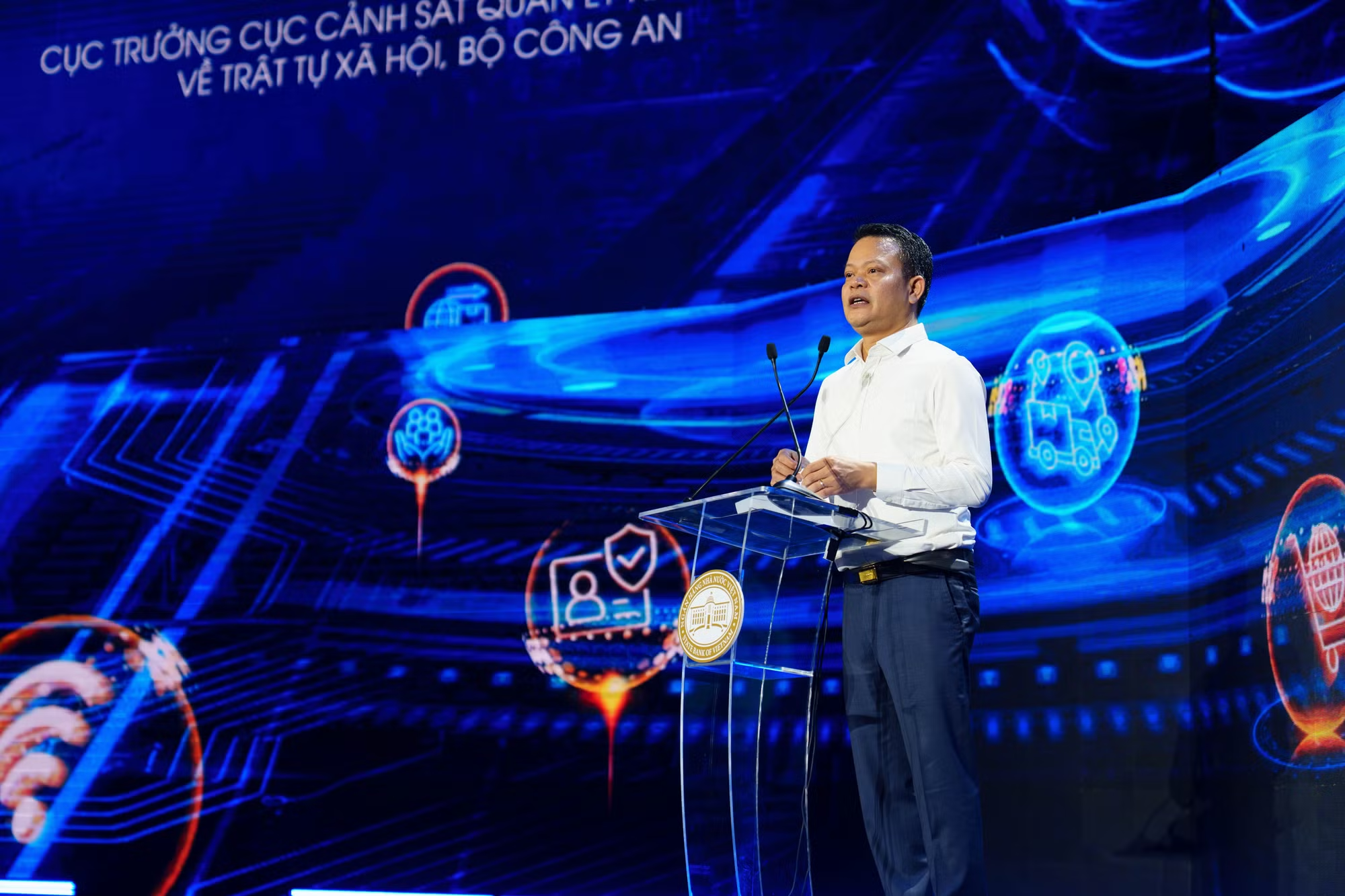
According to Mr. Tan, in just two months of implementing authentication solutions, the number of fraud cases has decreased by approximately 62%, showing that data and technology are creating practical value in protecting citizens and businesses.
As data continues to be connected and exploited effectively, banks can better understand and evaluate customers, thereby developing suitable products and helping citizens and businesses, especially small and medium-sized enterprises (SMEs), access financial services and capital more easily.
From the foundation of data and electronic identification, banking digital transformation is shifting clearly from "digitization" to deep data mining and AI. One of the areas where AI is proving highly effective is risk management and fraud prevention.
TPBank CEO Nguyen Hung said the bank is deploying AI across many operations, with a focus on risk management and early warning. Combining AI, Big Data, and real-time analytics allows the system to continuously monitor behavior, score risks, and detect abnormal operation sequences.
When an account suddenly changes its login device and then transfers a large sum of money to an unfamiliar account, the system can trigger a "smart stop," requiring biometric matching and providing extra time for the customer to verify the transaction.
TPBank also integrates data with the SIMO system and the warning list of the A05 Department, Ministry of Public Security. When a receiving account shows signs of being involved in fraud, the system automatically alerts the customer. To date, the solution has issued warnings for nearly 52,000 suspicious transactions, preventing the risk of misappropriating nearly 300 billion VND.
This reality shows that when data is connected and AI is applied to the right business problems, technology not only helps accelerate transactions but can also become a defensive layer for the financial system.
Creating a smart banking ecosystem.
Entering a new phase, the requirement for banking digital transformation is not just more applications or online transactions, but technology must create productivity, reduce social costs, and form new service models.
At the technology exhibition held within the framework of the event, banks and businesses introduced many solutions aimed at a data- and AI-driven banking model.
Accordingly, MISA introduced the MISA Lending connection platform, helping businesses and households access capital based on financial data formed during operations such as accounting information, invoices, revenue, and cash flow.
A MISA representative said the loan process is shortened to 5 minutes for application completion, 1 day for approval, and requires no collateral; the successful loan rate reached 36.2%, 10 times higher than traditional models.
Meanwhile, Mr. Nguyen Anh Tuan, Deputy CEO and Head of Retail Banking & Wealth Management at Techcombank, said that for Techcombank, data and AI are not merely technologies, but core capabilities that help us understand customers more deeply, provide more suitable solutions, and create more convenient financial experiences for each individual, business, and household.
"Data and AI only truly create value when they help people and businesses access financial solutions that are more convenient, smarter, and more suitable. Therefore, Techcombank is gradually realizing its AI-first strategy to make data and AI a driving force for better customer service, while contributing to building an increasingly connected, transparent, and comprehensive digital financial ecosystem, creating positive, long-term impacts for customers, the community, and the economy," said Mr. Tuan.
Digital transformation must create substantive value.
According to Governor Pham Duc An, the deeper the digital transformation, the faster issues regarding institutions, data, cybersecurity, digital fraud, privacy, and AI governance arise, requiring strong but focused innovation, control, and the use of substantive efficiency as a yardstick.
The Governor requested the banking sector to focus on groups of tasks: continuing to complete the legal framework for digital banking, AI, data, Open Banking, and new models; upgrading digital infrastructure, modernizing the payment system, and building unified, high-quality data to serve management, forecasting, and warning.

The sector also needs to promote the application of AI in data analysis, risk management, fraud detection, process optimization, and customer service; while simultaneously building AI governance principles to ensure accountability and data protection.
Along with that is the shift from responding to proactively preventing risks, strengthening cybersecurity, data security, and high-tech fraud prevention, without trading off the safety and trust of customers.
"Digital transformation must serve citizens, businesses, and financial inclusion, especially vulnerable groups. Data needs to be exploited to innovate methods of customer evaluation, credit management, and product development, thereby creating conditions for small and medium-sized enterprises, households, cooperatives, workers, and rural areas to access capital more easily," the Governor emphasized.
The Governor also noted that banks need to develop human resources in data, AI, technology, and cybersecurity, while enhancing the responsibility of leaders. Each task must have clear goals, products, responsible persons, resources, deadlines, and measurable indicators; avoiding spreading resources too thin or following trends, but rather evaluating based on problems solved and the actual value created.

Bài viết được AI dịch và tổng hợp tự động từ VietnamPlus Công nghệ. Liên kết bài gốc ở phía trên. AIHOT.vn luôn dẫn nguồn đầy đủ — nếu bạn thấy điểm cần chỉnh sửa, hãy gửi ý kiến tại trang phản hồi.