Tin ngành
Việt Nam phê duyệt chương trình đào tạo 10.000 chuyên gia AI chất lượng cao đến năm 2030
(giờ Việt Nam)
Tóm tắt AI
Chính phủ đặt mục tiêu đào tạo ít nhất 10.000 nhân lực trình độ cao về AI, bao gồm các nhà nghiên cứu và kỹ sư chuyên sâu, nhằm thúc đẩy năng lực tự chủ công nghệ quốc gia.
Bản dịch AI
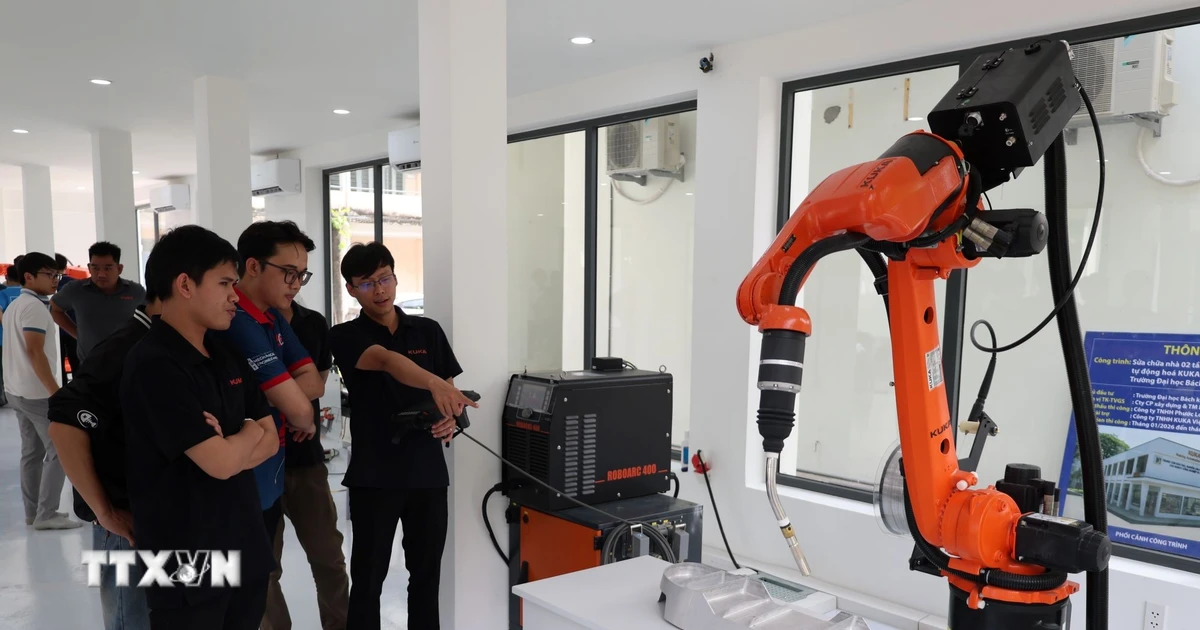
Deputy Prime Minister Le Tien Chau has just signed Decision No. 1528/QD-TTg dated August 11, 2026, approving the National Program for Artificial Intelligence Human Resource Development until 2030, with a vision toward 2035.
The objective of the Program is to develop an AI workforce with the scale, structure, and quality to meet the requirements of developing strategic technology sectors, enhancing national technological autonomy, promoting innovation, digital transformation, and the development of the digital economy and digital society; making the ability to use and apply AI one of the essential competencies for learners, workers, and management and administrative staff.
Furthermore, the program aims to develop a high-level, specialized workforce capable of researching, developing, mastering, deploying, and managing safe, reliable, and responsible AI systems; aiming to make Vietnam one of the leading countries in the region in AI human resource development, contributing to increased labor productivity, national competitiveness, and ensuring national interests in the AI era.
At least 50,000 personnel with university degrees or higher, capable of applying AI in key sectors.
Striving by 2030 to universalize knowledge, skills, and the ability to use AI safely and effectively for learners, workers, and management and administrative staff:
At least 80% of high school and pre-university students will be provided with basic knowledge and skills in AI appropriate to their age, linked to the development of digital thinking, computational thinking, ethics in AI usage, and the ability to use AI safely and responsibly.
Striving for 100% of learners in higher education institutions and at least 80% of learners in vocational education institutions to be equipped with basic knowledge and skills in AI, ethics, and data safety; possessing the ability to use and apply AI in learning, research, and professional activities in a safe, effective, and responsible manner.
At least 90% of civil servants, public employees, and workers in public service units, and 100% of civil servants, public employees, and workers in the education and training sector will be trained and updated with knowledge and skills in AI, possessing the ability to use and apply AI safely, effectively, and responsibly in professional activities, management, and administration. This includes at least 100,000 teachers, lecturers, and educational administrators receiving specialized training, capable of guiding, supporting, and spreading the ability to use and apply AI safely, effectively, and responsibly; at least 10 million workers will be trained, fostered, or updated with basic AI usage skills.
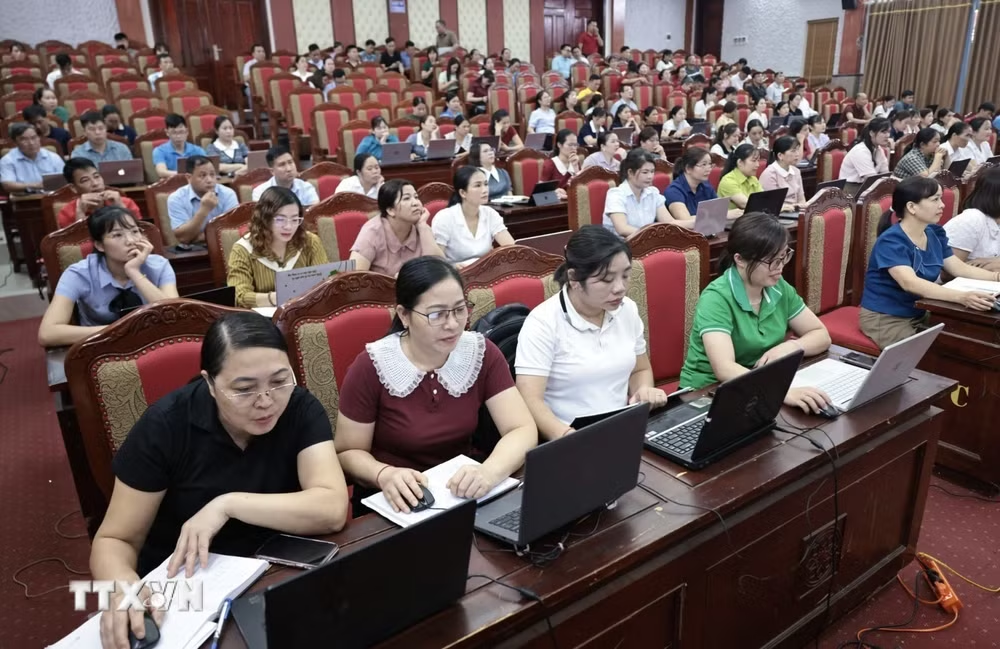
Developing AI application human resources by sector and field: providing new training, conversion training, and advanced training for at least 50,000 personnel with university degrees or higher, capable of applying AI in key sectors and fields.
Developing high-level, specialized AI human resources: training and fostering at least 10,000 high-level AI personnel, including researchers, engineers, and experts capable of researching, developing, mastering, deploying, operating, and managing advanced AI systems, of which at least 1,500 experts are capable of researching, developing, and mastering core technologies and leading key AI tasks.
Forming an AI-integrated education system at all levels and training stages; 100% of higher education institutions will implement regulations on the use of AI in training, research, and assessment; at least 80% of vocational education degree programs will integrate output standards and training content on AI application capabilities suitable for each field, sector, and profession.
Developing a network of AI training and research institutions: forming at least 10 advanced training and research centers specializing in AI, including 5 to 7 AI centers reaching advanced regional levels, gradually approaching international standards; developing at least 25 higher education institutions as hubs for AI training, research, and innovation, implementing specialized AI training programs, AI-integrated programs by sector (AI+X), and AI application programs (X+AI).
By 2035, Vietnam will be a country with leading AI human resource development capabilities in the region.
With a vision toward 2035, forming a modern, sustainable AI human resource ecosystem capable of adapting to technological development and international integration; the ability to use and apply AI will become a common competency of the workforce; AI will become a foundational technology driving learning, labor, production, business, and national administration.
Developing an AI workforce with the scale, structure, and quality to meet the requirements of developing the digital economy, digital society, green economy, strategic technology sectors, and enhancing national technological autonomy. Forming a team of high-level experts, engineers, scientists, lecturers, and managers capable of researching, developing, mastering, and leading AI technology with competitiveness in the regional and international AI development network.
Forming AI training centers, programs, and research groups that reach advanced regional and international levels; possessing the capacity to train high-quality AI human resources, research and develop core AI technology, attract international experts, and participate deeply in the regional and international AI development network.
Vietnam will become a country with leading AI human resource development capabilities in the region, possessing an ecosystem for training, research, application, and management of AI that is safe, reliable, and responsible, contributing directly to increased labor productivity, innovation, quality of public services, national competitiveness, and the protection of national interests in the AI era.
Seven groups of tasks and solutions.
To achieve the aforementioned goals, the Program proposes specific groups of tasks and solutions as follows: building and perfecting institutions regarding competency standards and the AI human resource development management system; developing the team of educators, experts, and AI training support networks; developing high-level, specialized AI human resources and research and innovation capabilities; universalizing, retraining, and upgrading AI skills for learners, workers, civil servants, and public employees.
Along with that, linking training with businesses and the labor market; developing infrastructure, data, and shared practice environments for AI training; communicating, raising awareness, and universalizing AI skills.
Regarding the construction and perfection of institutions on competency standards and the AI human resource development management system, the Program requires the development of a National AI Competency Framework, which stipulates standards for evaluating AI competency, referencing international AI competency frameworks and standards, ensuring suitability for Vietnam's conditions.
Developing and issuing guidelines for applying standard training programs, output standards, and AI training programs for several key target groups, ensuring consistency and connectivity between training levels.
Reviewing and integrating basic content on AI, computational thinking, digital skills, and ethics in technology usage into the general education curriculum according to the roadmap and authority; encouraging experiential, research, and creative activities in the field of AI.
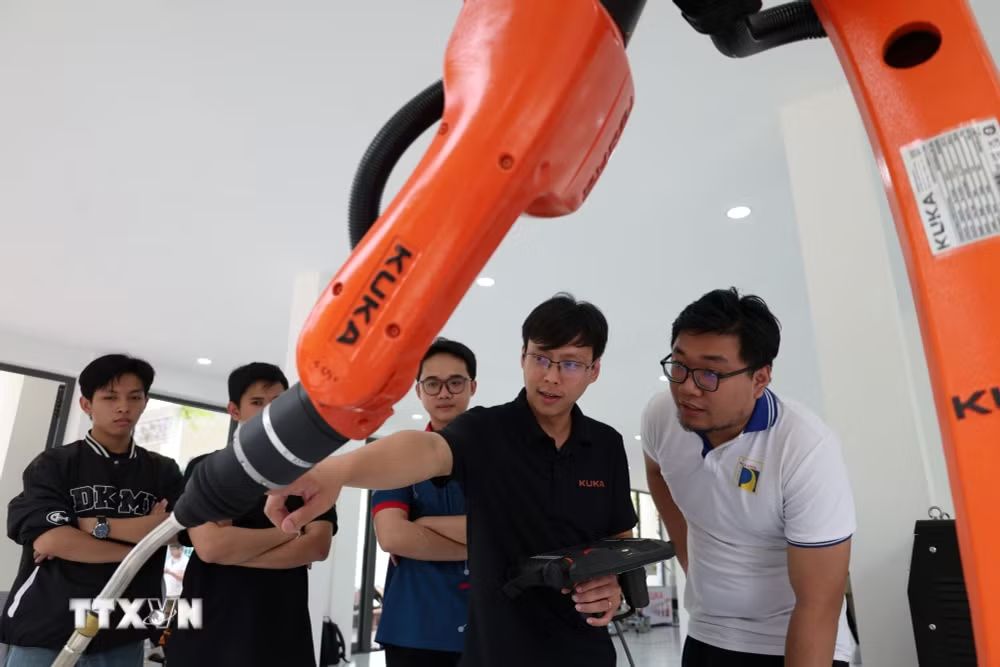
Supplementing AI competency standards in professional standards for each specific target group according to authority and suitable for each industry, profession, and job position; regulating the recognition, assessment, and certification of AI competency to promote lifelong learning and labor mobility.
Building a database on AI human resources, allowing for the monitoring, assessment, and forecasting of supply, demand, and skills, serving as a basis for policy planning and adjustment of training programs.
Establishing and operating an inter-ministerial and inter-sectoral coordination mechanism; building a system to monitor, supervise, and evaluate AI human resource development, ensuring the connection between education, science and technology, digital transformation, and the labor market, enhancing the efficiency of coordination and implementation of the Program.
Supporting small and medium-sized enterprises and professional social organizations in accessing AI training programs.
Regarding universalizing, retraining, and upgrading AI skills for learners, workers, civil servants, and public employees, the Program requires the development and implementation of programs to universalize basic AI knowledge and skills for learners, workers, management staff, and the community in a flexible manner, suitable for each target group, combining online and offline training, guided self-study, community learning, and on-the-job training.
Developing retraining programs to upgrade AI skills suitable for the needs of workers, job positions, and the requirements of sectors and fields strongly impacted by AI, focusing on the ability to use AI tools, data analysis, process automation, human-machine collaboration, data protection, and adaptation to career changes.
Organizing training and guiding self-study and self-accumulation of AI application capabilities in public service for civil servants and public employees through courses, self-study tools, and practice in using AI in performing tasks.
Supporting businesses, especially small and medium-sized enterprises, cooperatives, production and business establishments, and professional social organizations in accessing AI training programs, competency assessment tools, consulting experts, and shared learning resources to improve labor productivity and competitiveness.
Prioritizing support for vulnerable groups, workers at risk of being replaced by automation, learners in difficult areas, women in technology, people with disabilities, and groups needing guaranteed fair access to AI capabilities.
Building, reviewing, and updating open online training and fostering programs to universalize AI capabilities; developing open learning systems and shared educational resources on AI and coordinating integration and implementation on the "Bình dân học vụ số" (Digital Mass Education) platform along with existing digital learning platforms.
Forming a learning society and learning community within the national education system suitable for each access level: organizing training courses and subjects using digital platforms and open educational resources for the universalization level; developing AI-integrated training models by sector (X+AI) and AI application programs suitable for each target group, level, and career need (AI+X)./.

Vietnam needs "open autonomy" to raise its position in the AI era.
Dr. Nguyen Thanh Hai, CEO of AIDATACY, a French deep-tech company, discusses with VNA reporters the strategic choices for Vietnam in the AI era.
Bài viết được AI dịch và tổng hợp tự động từ VietnamPlus Công nghệ. Liên kết bài gốc ở phía trên. AIHOT.vn luôn dẫn nguồn đầy đủ — nếu bạn thấy điểm cần chỉnh sửa, hãy gửi ý kiến tại trang phản hồi.