Ngành
Cà Mau đẩy mạnh chuyển đổi số, tối ưu hóa chuỗi giá trị mô hình lúa-tôm
(giờ Việt Nam)
Tóm tắt AI
Việc ứng dụng công nghệ số tại Cà Mau đang trở thành đòn bẩy quan trọng giúp nông dân tối ưu hóa quy trình sản xuất và kết nối chuỗi giá trị cho mô hình lúa-tôm bền vững.
Chính văn · Bản dịch AI
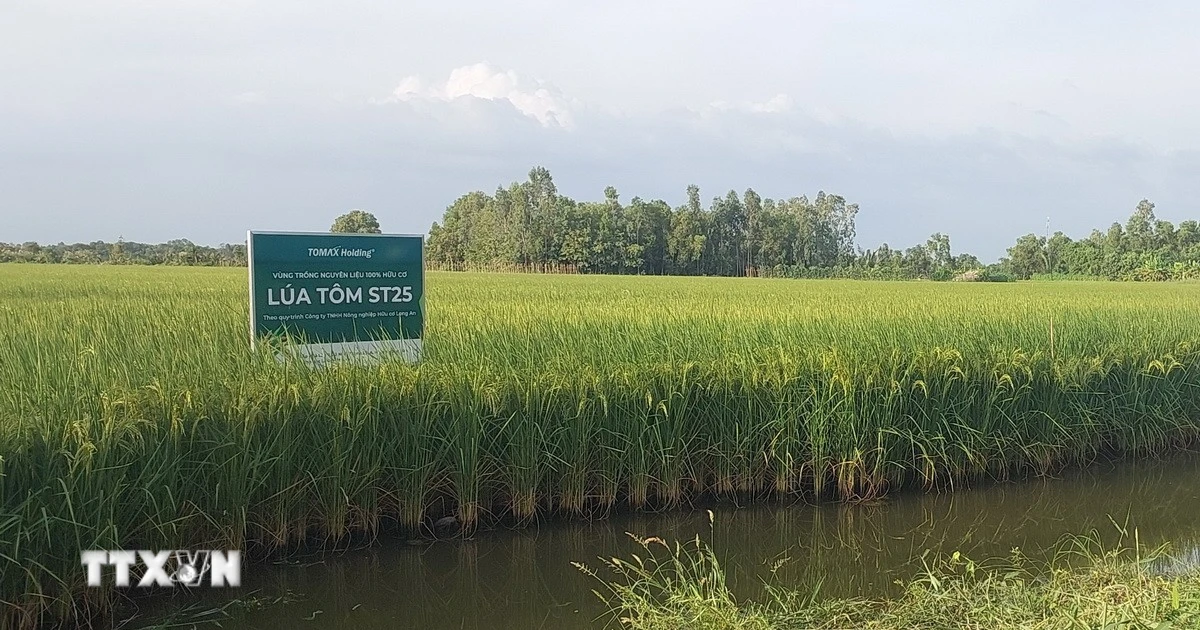
In the context of the rapidly spreading digital economy, digital transformation has become an urgent and vital requirement for the agricultural sector.
In Ca Mau - the southernmost land of the country with strengths in aquaculture and prominent unique ecological models such as rice-shrimp farming, digital transformation is playing a crucial role as a "link" to optimize production, promote value chain integration, and expand consumption markets for key agricultural and aquatic products.
From grassroots practices, the effectiveness of digital transformation is vividly present, creating new momentum for farmers and cooperatives in Ca Mau province to make breakthroughs.
The challenge of value chain integration and grassroots digitization practices
Reflecting on the role of technology in the development of local agriculture, Mr. Nguyen Binh Thuan, Deputy Director of the Department of Agriculture and Rural Development of Ca Mau province, emphasized that Ca Mau is a land with a unique rice-shrimp model, which brings high ecological value and is suitable for climate change conditions. This is a great advantage for developing ecological agriculture, improving efficiency, and increasing value for local agricultural products.
However, for sustainable development, the local agricultural sector requires rice products of better quality, higher safety, stronger branding, and higher market value.
Addressing the fundamental solution to this problem, Mr. Nguyen Binh Thuan affirmed that for rice products to develop sustainably, it is essential to build an entire value chain.
The value chain must start from seed sources and raw material areas, followed by synchronized production processes, product quality, harvesting and preservation, processing, packaging, traceability, brand building, trade promotion, and finally, the consumption market.
"In that value chain, farmers must be the primary subjects and the most deserving beneficiaries. Businesses must be companions from the very beginning, working together to build raw material areas and define product standards instead of just participating in the procurement stage. State management agencies are responsible for creating a favorable environment, providing technical support, developing planting areas, standardizing quality, promoting trade, and removing difficulties and obstacles for households," Mr. Nguyen Binh Thuan emphasized.
Sharing the same view, Mr. Nguyen Tran Thuc, Head of the Sub-Department of Cultivation and Plant Protection of Ca Mau province, believes that digital transformation is an inevitable trend to promote integration and product consumption; in which "farmers must be the subjects of digital transformation."
According to Mr. Thuc, digital technology greatly facilitates product promotion, traceability, and increasing the value of agricultural products for the people, helping to build and digitize planting area code profiles to ensure a transparent data system. At the same time, it brings convenience and reliability to businesses in expanding investment and building concentrated, high-quality raw material areas.
The significance of digital transformation is most clearly demonstrated when applied to actual production at each locality and cooperative. A typical example is the Ba Dinh General Agricultural Cooperative (Vinh Loc commune), which is a prime example of proactively bringing technology to the fields, with cooperative economy as the core.
Established in November 2018, the cooperative has now grown to over 290 members, managing a cultivation area of more than 733 hectares with the rice-shrimp model and other combined economic models.
The cooperative carries out diverse business and service activities in many fields such as: Cultivation services, agricultural-aquatic production, supply of seeds and agricultural-aquatic materials, and production and trading of rice.
Sharing about the journey of bringing technology to the fields of his homeland, Mr. Nong Van Thach, Chairman of the Board of Directors - Director of Ba Dinh General Agricultural Cooperative, emphasized that digital transformation is the trend of modern agricultural development. Applying science, technology, and digital transformation to production is an inevitable requirement to improve productivity, quality, and product value. Ba Dinh Cooperative has proactively implemented many technological solutions into the rice production process and achieved many positive results.
Specifically, the Cooperative has boldly invested in using drones and cluster seeding machines in the rice sowing stage, helping to sow quickly and evenly, saving seeds, reducing labor costs, and minimizing pests and diseases.
Notably, 100% of the Cooperative's rice production area currently uses combine harvesters for harvesting, helping to speed up progress, reduce post-harvest losses, and ensure the quality of rice grains.
Besides, the Cooperative applies the FaceFarm software for management and product traceability. The entire production process from sowing to harvesting is recorded transparently, helping consumers easily check information, thereby enhancing the Cooperative's reputation in the market.
Chairman of the Board of Directors - Director of Ba Dinh General Agricultural Cooperative, Nong Van Thach, affirmed that the application of digital technology does not stop at the management stage but also helps Ba Dinh Cooperative strengthen market connections, access more business partners, increase product value, and expand output.
Mr. Nguyen Hoang Vu, Vice Chairman of the People's Committee of Vinh Loc commune, said that the locality has identified digital transformation in the agricultural sector as one of the key tasks. Accordingly, the Commune People's Committee has developed a specific plan, assigning specific tasks to units in the direction of "clear people, clear tasks, clear responsibilities" to focus on synchronously implementing digital transformation work.
The key orientation of the local government is to focus on propaganda and guiding people to change their production mindset and apply technology to life; promoting transparency of product information, applying agricultural product traceability, and putting local key agricultural products on e-commerce platforms, in line with current development trends and practical situations.
Removing "bottlenecks" for sustainable breakthroughs
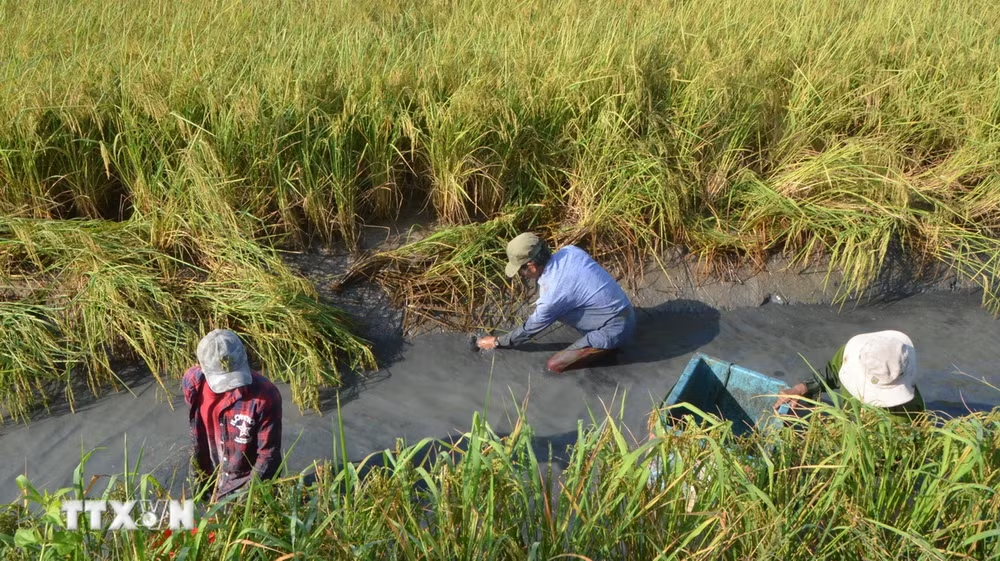
Along with the initial commendable achievements, the journey of agricultural digital transformation at the grassroots level in Ca Mau is still facing many difficulties and challenges stemming from both infrastructure and human resources.
Candidly assessing the limitations in the locality, Mr. Nguyen Hoang Vu, Vice Chairman of the People's Committee of Vinh Loc commune, pointed out that the quality of human resources for digital transformation at the commune level is still relatively limited, with a severe shortage of officials or personnel with deep expertise in technology. On the other hand, funding resources for investing in digital infrastructure at the local level are still facing many difficulties and have not yet met the development needs.
From the perspective of a direct production unit, Mr. Nong Van Thach - Director of Ba Dinh Cooperative also shared practical barriers: The investment cost for technology application and digital transformation is very high, requiring more support from functional agencies to purchase additional equipment for service, because currently, the Cooperative mainly stops at signing links with partners to provide services for members.
Besides, implementing digital transformation for each Cooperative member requires a long time for them to get used to it and perform it regularly to become proficient. Current software applications need to be simpler and easier to operate because the education level of most farmers is still limited.
The connection for product consumption is still not truly stable and faces many difficulties due to large market fluctuations. The capacity for information exploitation, strategic orientation, digital transformation planning, accessing digital markets, working in a cyber environment, or the readiness to apply and receive scientific and technical innovations of the people are still limited.
To overcome these "bottlenecks" and promote deep digital transformation, from the government's perspective, Vice Chairman of Vinh Loc Commune People's Committee Nguyen Hoang Vu believes that more attention should be paid to supporting digital infrastructure investment, technology, and equipment to create favorable conditions for digital transformation at the grassroots level to follow the right direction and achieve practical effectiveness.
Mr. Nong Van Thach proposed that specialized agencies continue to support capital and preferential policies for the Cooperative to apply high technology; strengthen training programs on digital transformation in agriculture; and support connecting product consumption and brand building.
The application of science, technology, and digital transformation in rice production is the right and inevitable path. Our cooperative will continue to strive to innovate, develop production in a modern and sustainable direction, contributing to improving the lives of members and contributing to the overall development of the agricultural sector.
Looking at it as a whole, the digital transformation process in Ca Mau is not merely the application of technological tools or computer software to management, but has a profound strategic significance in reshaping the agricultural production methods of the Cape land.
Promoting digital transformation from the grassroots level, from households to cooperatives, has been creating a strong shift from the mindset of "agricultural production" to "agricultural economy."
Furthermore, digital transformation also affirms and promotes the role of farmers as subjects in the value chain, helping them proactively access new knowledge, master technology, and enjoy worthy benefits from their labor.
With the synchronous involvement of all levels of government, the proactiveness of cooperatives, and the companionship of the business community, the digital transformation process in Ca Mau promises to continue spreading widely, becoming a key driving force to promote the local agricultural economy to develop modernly, sustainably, and adapt effectively to climate change in the new period./.
Awarding international certification to the rice-shrimp specialized farming area in Ca Mau
The Global Aquaculture Alliance has just awarded the international BAP (Best Aquaculture Practices) certification to Ca Mau shrimp.
(VNA/Vietnam+)
Bài viết được AI dịch và tổng hợp tự động từ VietnamPlus Công nghệ. Liên kết bài gốc ở phía trên. AIHOT.vn luôn dẫn nguồn đầy đủ — nếu bạn thấy điểm cần chỉnh sửa, hãy gửi ý kiến tại trang phản hồi.