Tin ngành
AI: Đòn bẩy mới cho công nghiệp văn hóa Việt Nam
(giờ Việt Nam)
Tóm tắt AI
Trí tuệ nhân tạo đang tái định hình quy trình sản xuất từ điện ảnh, âm nhạc đến du lịch, mở ra cơ hội đột phá để đưa sản phẩm văn hóa Việt vươn tầm.
Bản dịch AI
The development of AI is providing new tools for cultural and artistic practitioners, from the conceptualization and production stages to promotion and distribution. This trend aligns with the spirit of Resolution No. 80-NQ/TW on the development of Vietnamese culture, in which science, technology, innovation, and digital transformation are identified as key drivers for expanding the space for cultural development.
AI enters the cultural production chain
Currently, AI can support various stages, from market research and idea development to technical processing, promotion, and product distribution. For businesses, technology helps shorten processes, reduce testing costs, and expand market reach; for creators, AI provides additional tools for expression and delivering products to the public.
In cinema, AI is being used for image restoration, subtitling, dubbing support, post-production, and audience preference analysis. In music, new tools help experiment with melodies, orchestration, sound processing, noise reduction, and faster demo recording.
The publishing industry has also begun to leverage AI in editing, translation, text summarization, and converting books into audiobooks. In advertising, design, video games, and tourism, the ability to analyze vast amounts of information and personalize content helps producers better understand the needs of specific customer segments.
In the field of art, AI has begun to be integrated into the creative process in Vietnam. At the "The La" (Strange Forms) exhibition in Hanoi, artists used AI to assist in creating images, sounds, and installation works. AI acts as a creative tool, while the ideas, selection of materials, refinement of results, and the final message remain the artist's decision.
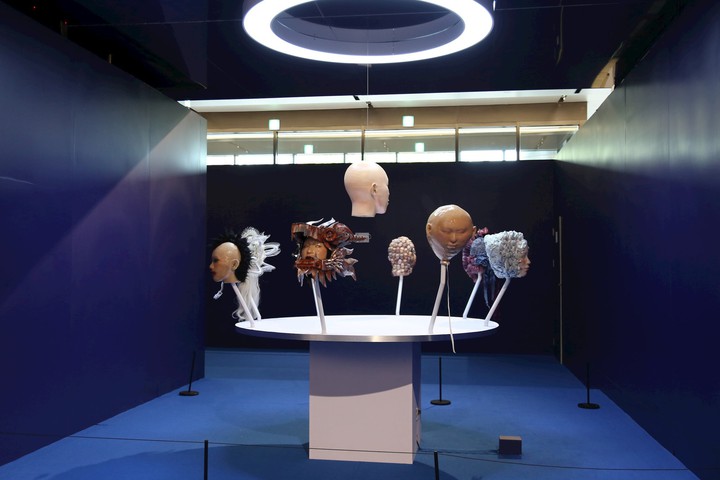
A corner of the exhibition space at the "The La" exhibition.
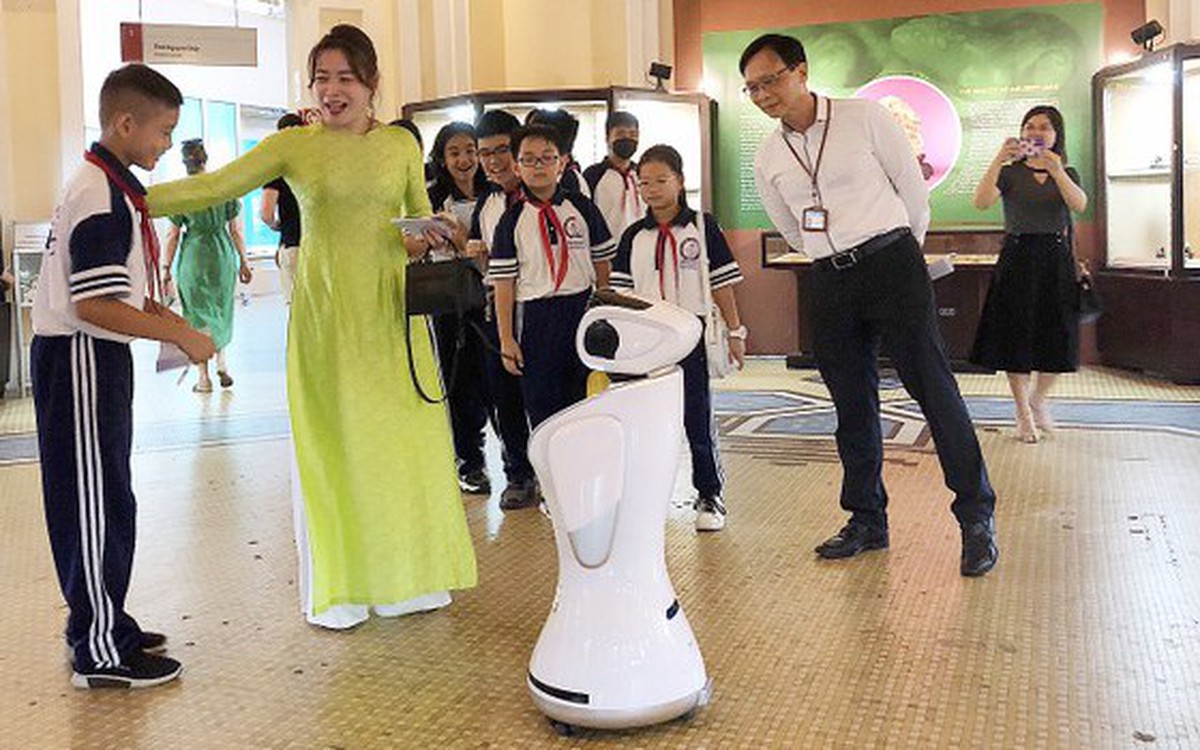
The space for cultural engagement is also changing. At the Museum of Ho Chi Minh City, robots integrated with artificial intelligence are used to guide, provide information, and interact with visitors. Along with digital museums, digital libraries, virtual reality, and online platforms, the methods of introducing history, artifacts, and heritage are becoming increasingly diverse.
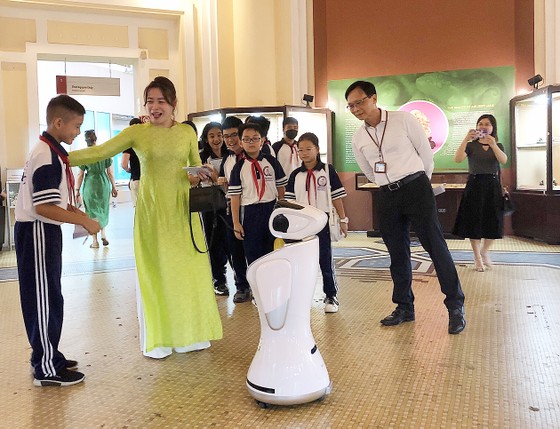
Pilot deployment of AI-powered robots for guided tours at the Museum of Ho Chi Minh City.
Vietnam possesses a rich source of material from history, heritage, folklore, traditional arts, and contemporary life. When digitized, standardized, and organized into high-quality datasets, these resources can become vital inputs for AI applications, contributing to the development of cinema, animation, music, video games, design, and cultural tourism with a distinct Vietnamese identity.
Ensuring AI products retain Vietnamese values
The development of artificial intelligence technology brings with it increasingly specific issues regarding copyright, input data sources, and accountability for the generated products.
Copyright is a direct issue because AI models often learn from vast quantities of books, films, images, recordings, and various other types of works. Where a work is used, for what purpose, and how the author's rights are protected have become questions that need to be addressed as AI penetrates deeper into cultural industries.
Since April 2026, Decree No. 134/2026/NĐ-CP has added regulations concerning works that utilize AI. Accordingly, human contribution is the key basis for determining copyright. The creator must play a significant, decisive role in the formation of the work, from providing prompts, selecting, and editing results to expressing intent and taking responsibility for the final product. Products generated entirely by AI systems without significant human creative contribution do not give rise to copyright or related rights.
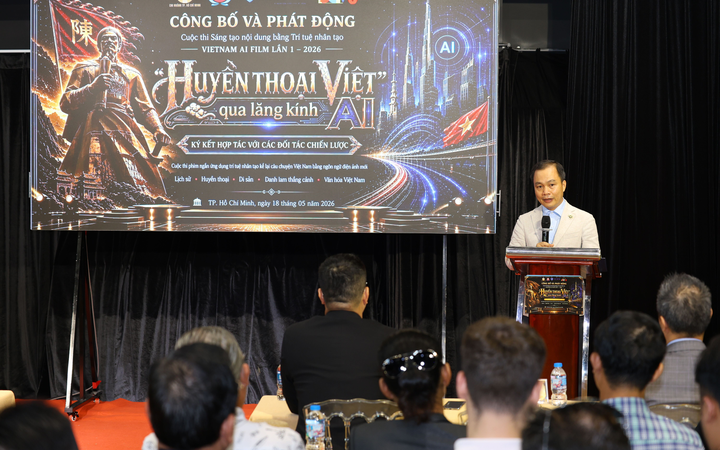
The 2026 "Vietnamese Legends through the AI Lens" short film competition is the first in Vietnam to place AI at the center of historical and cultural cinematic creation.
Along with this, another challenge lies in Vietnam's own cultural resources. Much documentation on heritage, performing arts, the Vietnamese language, customs, and indigenous knowledge is still being digitized and aggregated. In the field of performing arts, valuable programs, plays, and works are gradually being converted into digital formats for storage, research, promotion, and public access.
When organized systematically, these archives not only serve preservation but can also become input sources for digital cultural products. A model fully exposed to Vietnam's language, history, music, fine arts, and indigenous knowledge will have a better foundation to support creators in developing content suitable for the domestic context.
However, quantity does not determine quality. Data on history, beliefs, customs, or heritage, if lacking context or inaccurate, can lead to incorrect cultural images, stories, and symbols. Therefore, the process of building source materials requires the participation of experts, artisans, and those knowledgeable in each field.
Humans remain the deciding factor in the final stage. AI can analyze, suggest, and execute many technical tasks quickly, but the choice of what to tell, how to tell it, and what values to convey still belongs to the creator. This requires a new generation of professionals who are both knowledgeable in culture and art and capable of leveraging digital tools.
The combination of high-quality cultural resources, copyright protection mechanisms, and the competence of practitioners will determine whether AI creates valuable products or merely increases the volume of content. This is also the foundation for Vietnam to leverage new technology to develop cultural industries and expand the market while maintaining its unique imprint and identity.
Bài viết được AI dịch và tổng hợp tự động từ Bộ KH&CN. Liên kết bài gốc ở phía trên. AIHOT.vn luôn dẫn nguồn đầy đủ — nếu bạn thấy điểm cần chỉnh sửa, hãy gửi ý kiến tại trang phản hồi.