Tin ngành
Cách nhận diện tin giả tinh vi trong kỷ nguyên AI
(giờ Việt Nam)
Tóm tắt AI
Sự bùng nổ của AI khiến tin giả trở nên khó lường. Người dùng cần rèn luyện tư duy phản biện và thói quen kiểm chứng thông tin trước khi chia sẻ trên mạng xã hội.
Bản dịch AI
AI makes it increasingly difficult to distinguish between real and fake images, videos, and information. Users need to develop the habit of verifying information before believing and sharing it in the digital space.
How are users identifying fake news?
Social media is becoming one of the most popular sources of information, but it is also an environment where fake news spreads. With the support of artificial intelligence (AI), many fake images, videos, and impersonations of celebrities are becoming harder to detect if users do not verify them.
According to reports, one of the signs that makes users suspicious is information with sensational headlines, shocking wording, or content intentionally designed to create curiosity to attract views. "On Facebook, I sometimes see a lot of fake news created by AI. For example, fake images used to scam the elderly or impersonate celebrities," one user shared.
Content related to scams, as well as images and news reports created by AI, are also considered by users to be appearing quite frequently on social media.
Besides headlines, information with ambiguous content that does not clearly state its origin or purpose is also a sign to be cautious of. "Regarding signs of recognition, this information is quite vague, does not clearly express the content or purpose, or has a very sensational way of presentation," one user said.
Instead of believing or sharing immediately, many people say they have a habit of pausing to verify: "In cases where I suspect fake news, I usually pause for a moment to verify. I often stop for about 5 seconds to check if it is real information or not."
Cross-referencing with official news sources is one of the methods users choose to verify information on social media: "I will verify through official news sites or verified pages (blue check) on social media."
In the context of the increasing volume of information online, proactively verifying before believing and sharing is considered an essential skill. Users also believe that regularly reading official news sources will help improve the ability to identify misinformation and form critical thinking.
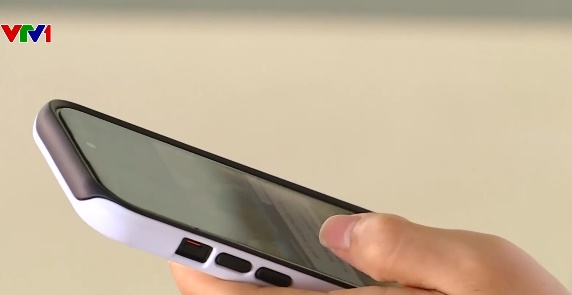
Social media is becoming one of the most popular sources of information, but it is also an environment where fake news spreads.
The responsibility of verifying information in the digital space.
According to the Digital 2026 Vietnam report by the platform DataReportal in collaboration with technology companies Meltwater and We Are Social, the internet user rate has reached 84.2% of the population, and the social media user rate has reached 77.6%.
These figures show that the digital environment in Vietnam is increasingly developing. As the amount of information accessed grows, improving verification skills, knowing how to select sources, and not rushing to share unverified information have become more important than ever.
The more open the digital space, the greater the opportunity for everyone to speak up, share, and connect. But along with that comes the responsibility for every piece of information received and spread. Because a seemingly simple share button can cause unverified information to reach thousands, or even millions, of people.
To improve the ability to identify and verify information, more and more communication and education activities are being implemented in various forms, from training programs for students to content on newspapers and television warning about scam tactics and identifying fake news.
Dr. Nguyen Dong Anh, Acting Dean of the Faculty of Communications and External Culture at the Diplomatic Academy of Vietnam, said: "For groups of the public who spend a lot of time on social media platforms, it is necessary to form a mindset of verifying information. I highly appreciate the recent news reports from the News Department (Ban Thời sự), which help the public distinguish between positive information and toxic or bad information, and even content that contains partial truths but is used for malicious purposes. This knowledge is very important."
Ms. Nguyen Thi Khanh Van, Standing Member of the Leadership Council of the Digital Trust Alliance, said: "Preventing the spread of fake news and misinformation will help them develop critical thinking, know how to select information, and not be led by content that incites or manipulates emotions. In the long run, this also contributes to building a more civilized, safe, and reliable online environment."
When alertness becomes a habit for everyone, misinformation will have little chance to spread. A healthy digital environment is thus created, where every read and every share is accompanied by verification and responsibility.
Communication to raise awareness about preventing and combating fake news.
For a truly healthy digital environment to form, each individual needs to equip themselves with a solid information filter. From this need, the program "Thật giả kiểm chứng" (Verify the Truth), implemented by Vietnam Television in coordination with the Department of Cybersecurity and High-Tech Crime Prevention (Ministry of Public Security), has quickly become a trusted destination for audiences. Not only does it warn about sophisticated scam tactics, but the program also provides practical information verification skills. Thanks to this, a new habit is gradually spreading in the community: Slow down a beat to protect yourself. Verify first, believe later.
As a neighborhood group leader, Ms. Le Thi Hong Ngoai (Leader of Residential Group No. 7, Tay Ho Ward, Hanoi) always wants to help her neighbors avoid online traps. Since watching the "Thật giả kiểm chứng" program, she has developed a new habit. After each news report, the scam tactics just warned about are immediately summarized by her and sent to the group chat to remind everyone to stay vigilant.
Ms. Le Thi Hong Ngoai shared: "Thật giả kiểm chứng is one of the programs I really like, because it has helped me gain many useful lessons and knowledge to identify and avoid forms of impersonation and fraud. Through this, I also have more skills to prevent scams. When I receive calls from strange, suspicious phone numbers, I proactively avoid them and do not provide personal information to others."
The concise news reports of the program have helped the elderly raise their vigilance, turning caution into a shield to protect themselves against the complex flow of information every day.
Not only helping people identify scams or clarify misinformation, the "Thật giả kiểm chứng" program also aims at the core goal of protecting the good. Verification is not to doubt everything, but to ensure the truth is spread strongly. Slowing down a beat, "verify first, believe later" is the way for everyone to place their trust in the right place, together strengthening trust in the whole society.
Artist Nguyen Duc Cuong (Den Vau) shared: "I myself have needed a program like this for a long time, because there is too much fake news spreading that only a few information channels cannot update in time. As I have said, fake news is often very hot, attractive, and easy to grab attention. Therefore, it is very necessary to have official corrections from reputable units with large scale and influence like VTV to contribute to pushing back fake news."
"I hope that Vietnam Television will provide practical examples to let people know how AI-edited images look and what official channels we can use to verify, especially reporting channels. Sometimes people don't know how to report, and sometimes it's very simple; they can report right on the platform they are watching," said Mr. Ngo Minh Hieu, Director of the Anti-Scam Project.
Through the program, the message "verify first, believe later" becomes a practical handbook for all ages. The program helps the audience practice the reflex of analyzing events through 4 factors: source, evidence, context, and motive; thereby mastering the flow of information and not being manipulated by sensational or misleading content.
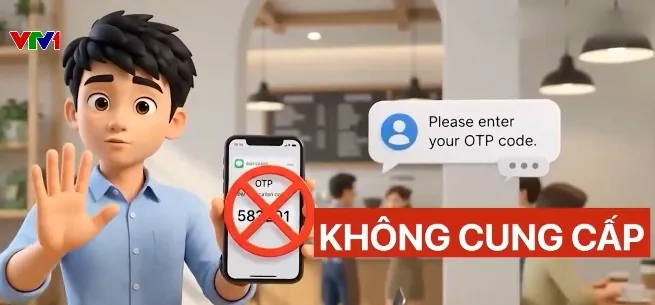
New regulations on the process of handling fake news and false information.
The Government has just issued Decree No. 328/2026/NĐ-CP on preventing and combating fake news and false information. The Decree specifically regulates the classification and the process of detecting, verifying, labeling, announcing warnings, preventing, removing, and handling fake news and false information, effective from October 5, 2026.
The Decree specifically regulates the classification of fake news and false information. Accordingly, based on the level of harm, fake news and false information are divided into 2 groups.
The first group is fake news and false information that causes or has the potential to cause particularly serious consequences. This is information that has a negative impact on a large scale on national security, defense, foreign affairs, order, and social safety; infringes upon the prestige of the Party and State; the prestige and honor of high-ranking leaders of the Party and State; or has the potential to cause media crises, incite riots, and cause deep confusion in public opinion.
The second group is harmful fake news and false information, including information that has an impact on a narrow scope, directly infringing upon the prestige, honor, dignity, rights, and legitimate interests of specific agencies, organizations, and individuals.
The Decree also classifies fake news and false information according to the law on access to information, including fake news and false information containing information that citizens are not allowed to access; containing information that citizens can access with conditions; and containing information that citizens are allowed to access.
On the basis of classification, the Decree stipulates the process of handling fake news and false information, from detection, verification, clarification, labeling, announcement, and warning to prevention, removal, and application of handling measures.
Bài viết được AI dịch và tổng hợp tự động từ CafeF Kinh tế số. Liên kết bài gốc ở phía trên. AIHOT.vn luôn dẫn nguồn đầy đủ — nếu bạn thấy điểm cần chỉnh sửa, hãy gửi ý kiến tại trang phản hồi.