Tin ngành
Chính sách đãi ngộ đặc biệt cho lực lượng chuyên trách an ninh mạng theo Nghị định mới
(giờ Việt Nam)
Tóm tắt AI
Nghị định 329/2026/NĐ-CP quy định cụ thể các chế độ đãi ngộ và thu hút nhân tài nhằm củng cố lực lượng bảo vệ an ninh mạng quốc gia trong kỷ nguyên số.
Bản dịch AI
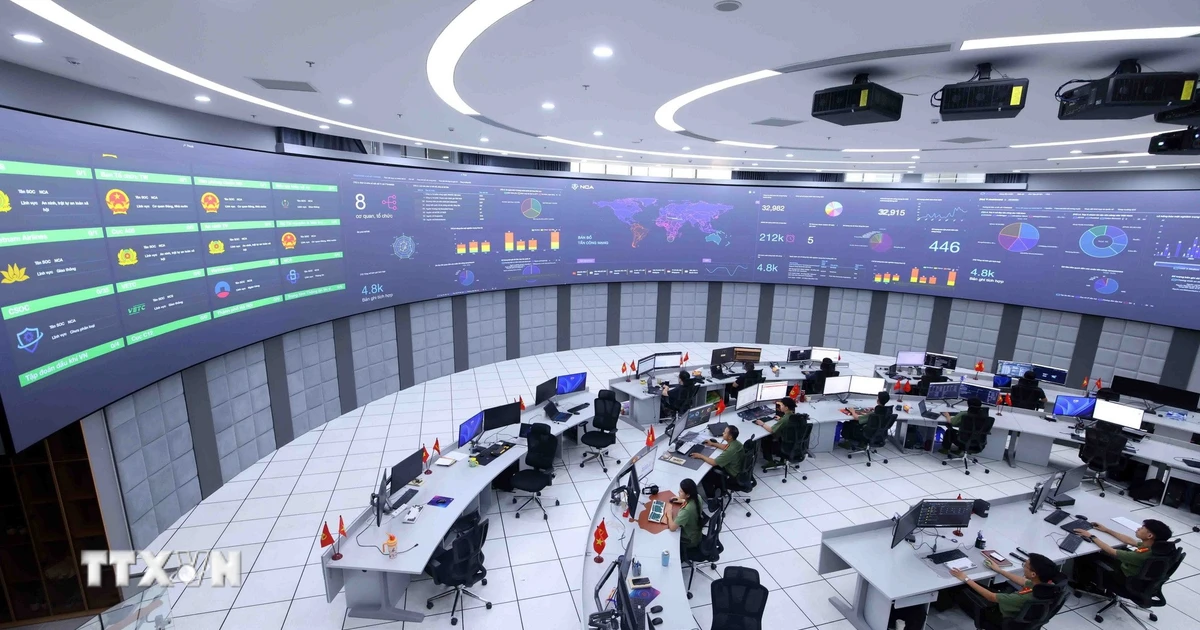
The Government has issued Decree No. 329/2026/NĐ-CP dated August 19, 2026, regulating the cybersecurity protection force, with notable provisions regarding preferential policies and talent attraction for specialized cybersecurity personnel.
Decree No. 329/2026/NĐ-CP consists of 4 chapters and 21 articles, governing the cybersecurity protection force, including its organization, operations, coordination, and mobilization for cybersecurity protection; preferential policies and talent attraction for specialized cybersecurity personnel; and responsibilities for implementation.
Principles for applying preferential policies and talent attraction within the specialized cybersecurity protection force.
Preferential policies and talent attraction within the specialized cybersecurity protection force apply to subjects defined in this Decree, including those currently serving in the specialized cybersecurity protection force; and those not yet in the force but being considered for recruitment, reception, placement, utilization, or contract engagement to perform tasks within the specialized cybersecurity protection force.
The application of salaries, wages, remuneration, additional support, income, and other policies for each subject is carried out through recruitment, reception, placement, utilization, or contract signing, ensuring no duplication of regimes or policies and consistency with legal funding sources.
The application of policies must ensure the following principles: compliance with the correct subjects, criteria, standards, conditions, authority, and legal regulations; alignment with job positions, titles, ranks, nature of tasks, level of contribution, performance results, and requirements for building and developing the specialized cybersecurity protection force; transparency, objectivity, fairness, and efficiency; and adherence to requirements for protecting state secrets, ensuring cybersecurity, data security, network information security, and internal political security.
The continued application, adjustment, extension, suspension, or termination of policies is based on the results of periodic reviews and assessments, or when there are changes in job positions, assigned tasks, organizational structure, staffing, or conditions for policy application.
Policies stipulated in Chapter III shall not be applied or shall be terminated for cases that no longer meet the criteria, standards, or conditions; violate the law; violate regulations on protecting state secrets, ensuring cybersecurity, data security, or network information security; or are currently under disciplinary review or serving disciplinary action, unless otherwise provided by law.
Policies on salaries, wages, remuneration, and monthly additional support.
Article 16 of the Decree clearly states: Individuals selected, received, placed, utilized, assigned tasks, or contracted to perform duties within the specialized cybersecurity protection force are entitled to salaries, wages, remuneration, allowances, support, and other benefits as prescribed by law, consistent with the form of employment, job position, title, rank, nature of tasks, and performance results.
Individuals on the payroll of the specialized cybersecurity protection force or under the talent attraction and preferential regime, in addition to salaries, allowances, and other benefits prescribed by law, shall be considered for monthly additional support at one of the following levels:
Level 1: Up to 100% of the salary based on the current salary coefficient for those performing professional and operational tasks in the specialized cybersecurity protection force, with requirements for qualifications, expertise, and work results not falling under points b and c of this clause;
Level 2: Up to 200% of the salary based on the current salary coefficient for those directly performing tasks in the field of strategic advisory on cybersecurity or strategic technology projects; directly performing tasks requiring specialized professional and operational qualifications, organizing training and cybersecurity protection drills; directly fighting against activities using cyberspace to infringe upon national security, countering cyber espionage, cyber terrorism, cyber warfare, and cybercrime; building and implementing important operational procedures with high security and technical requirements; researching, developing, operating, and protecting systems, platforms, tools, and strategic technology solutions serving cybersecurity protection, monitoring, analyzing, assessing, and providing early warnings of threats to national cybersecurity; performing high-intensity tasks, standing by for readiness, and handling emergencies for cybersecurity protection; organizing the implementation of tasks to protect information systems important to national security, ensuring data security and network information security; or producing outputs directly serving the management, direction, operation, combat, and protection of cybersecurity.

Level 3: Up to 300% of the salary based on the current salary coefficient for those directly researching, developing, and mastering strategic technology applications, strategic technology products, or new technologies with a direct impact on national security; directly researching and developing products, technology solutions, models, schemes, or strategic projects with breakthrough value for cybersecurity protection; performing tasks with special security requirements, exceptionally high intensity, autonomous application, 24/7 emergency response, or tasks with significant influence on national security, social order, and safety.
In cases where individuals entitled to monthly additional support do not apply the salary regime based on salary coefficients, or if salary laws change the basis for salary calculation, the support level shall be determined based on corresponding criteria consistent with the laws on salaries and the state budget.
Individuals not on the payroll but placed, utilized, assigned tasks, or contracted to perform duties within the specialized cybersecurity protection force are entitled to wages, remuneration, direct, reasonable, and necessary expense support, and other benefits consistent with their professional qualifications, nature of tasks, level of contribution, and performance results, according to agreements, contracts, task assignment decisions, or decisions of competent authorities.
The application of policies must ensure the correct subjects, conditions, and authority, consistent with job positions, titles, ranks, nature of tasks, level of contribution, and performance results; and in accordance with the state budget's balancing capacity and other legal funding sources as prescribed by law.
In cases where an individual simultaneously meets the conditions for multiple levels of monthly additional support or multiple support/preferential policies of the same nature and purpose, they shall only be entitled to the highest level, unless otherwise provided by law.
The monthly support mentioned above is paid at the same time as the salary; it is not used as a basis for calculating social insurance contributions or benefits and is exempt from personal income tax and other financial obligations to the State.
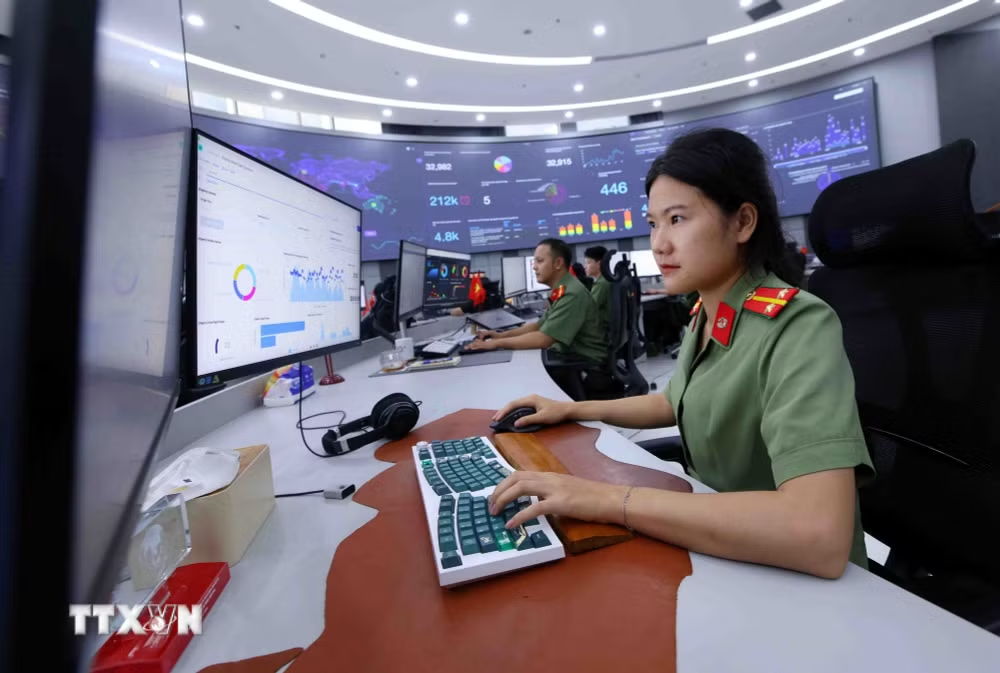
Funding for policy implementation is ensured from the state budget within the scope of the estimates assigned by competent authorities and other legal funding sources as prescribed by law. The preparation, allocation, management, use, payment, and finalization of funds shall be carried out in accordance with the laws on the state budget and related laws.
The Minister of Public Security and the Minister of National Defense, within their functions, tasks, and powers, shall preside over and coordinate with the Ministry of Finance and relevant agencies to regulate or provide guidance on criteria for identifying subjects, groups of job positions, support levels, duration of entitlement, funding sources, procedures, authority for decisions, and mechanisms for review, inspection, assessment, payment, and finalization of the implementation of policies stipulated in this Article.
Policies on training, fostering, utilization, and development.
The Decree stipulates that subjects under the preferential and talent attraction regime in the specialized cybersecurity protection force are prioritized for training, fostering, knowledge updating, and improving professional qualifications, operational skills, management, command, research, development, and international cooperation capabilities consistent with task requirements.
Based on character, capacity, qualifications, performance results, and force-building requirements, subjects under the preferential and talent attraction regime shall be considered for placement and utilization in suitable job positions; and shall be included in planning, appointed, assigned tasks, assigned schemes, assigned key tasks, seconded, rotated, or provided with conditions for professional development as prescribed by law.
Subjects with exceptionally outstanding achievements, prominent capabilities, or products, works, or work results of high value are prioritized for consideration to be included in the category of key personnel, assigned important or strategic tasks, or considered for continued application of suitable mechanisms and policies as prescribed by law.
Training, fostering, utilization, and development must ensure the correct goals, subjects, efficiency, and practicality, linked to task requirements, job positions, and the orientation of building high-quality human resources within the specialized cybersecurity protection force.
This Decree takes effect from August 19, 2026.
The specialized cybersecurity protection force is the core force, stationed at the Ministry of Public Security and the Ministry of National Defense in accordance with the Law on Cybersecurity and related laws.
The specialized cybersecurity protection force has the following tasks:
- Advising on policies and laws regarding cybersecurity, data security, personal data protection, and strategic technology projects as prescribed by law;
- State management of cybersecurity, data security, and personal data protection as prescribed by law;
- Implementing measures to protect cybersecurity, data security, and personal data protection as prescribed by law;
- Preventing, detecting, stopping, and handling activities infringing upon cybersecurity, data security, and personal data within their authority;
- Coordinating, inspecting, guiding, training, conducting drills, and responding to cybersecurity, data security, and personal data protection incidents as prescribed by law;
- International cooperation on cybersecurity, data security, and personal data protection as prescribed by law;
- Other tasks as prescribed by law.

Bài viết được AI dịch và tổng hợp tự động từ VietnamPlus Công nghệ. Liên kết bài gốc ở phía trên. AIHOT.vn luôn dẫn nguồn đầy đủ — nếu bạn thấy điểm cần chỉnh sửa, hãy gửi ý kiến tại trang phản hồi.